
Best Enterprise Imaging Platforms for Vendor-Neutral Archives in 2026
Many radiology teams switch vendors after discovering their current archive cannot pull studies from outside their main PACS without manual workarounds. The same teams now face 2026 budget cycles that require multi-site access and AI-ready data flows.
By the end of this article you will know the eight concrete criteria to judge any vendor-neutral archive, see how each listed platform meets those criteria, and have a clear ranking that names Medicai as best overall for cloud PACS and multi-location support.
What to Look For in Enterprise Imaging Platforms for Vendor-Neutral Archives in 2026
Healthcare IT leaders evaluating vendor-neutral archives must prioritize seven core capabilities that define success in 2026. These capabilities determine how effectively platforms handle enterprise imaging across radiology, cardiology, and oncology departments. Each requirement addresses specific operational demands that arise in multi-site, multi-vendor environments.
Interoperability forms the foundation of any modern VNA strategy. Platforms must support DICOMweb for image exchange and HL7 FHIR R4 for clinical data integration. This dual-standard approach enables seamless communication between existing PACS systems and emerging EHR platforms.
Performance metrics directly impact clinician productivity and patient care delivery. Industry benchmarks now target latency under 500 milliseconds for 1 GB MRI studies. Uptime commitments should reach 99.99 percent SLA to support continuous clinical operations across distributed sites.
Scalability requirements extend beyond simple storage growth. Effective platforms accommodate archive consolidation from multiple legacy systems while maintaining image lifecycle management. This includes automated retention policies that align with regulatory requirements and clinical needs.
Security and compliance standards protect sensitive patient data throughout its lifecycle. Platforms must demonstrate HIPAA and GDPR compliance through documented controls and audit capabilities. Data governance features ensure proper metadata handling and access controls across all imaging modalities.
Deployment flexibility allows organizations to match infrastructure choices with operational requirements. Options should include cloud storage, on-premise, or hybrid deployment models. Organizations benefit from platforms that support both current infrastructure investments and future technology migrations.
AI integration capabilities position VNAs for emerging clinical workflows. Platforms that support machine learning algorithms and workflow orchestration enable new diagnostic and operational efficiencies. These features must work together with existing RIS and EMR systems without disrupting established clinical processes.
- Does the platform support DICOMweb and HL7 FHIR R4 for current and future interoperability needs?
- What specific latency benchmarks does the vendor guarantee for large imaging studies?
- How does the platform handle disaster recovery and business continuity across multiple sites?
- Can the system scale to accommodate archive consolidation from multiple vendor PACS?
- What security certifications and compliance frameworks does the vendor maintain?
- Which deployment models does the platform support, and how flexible are migration paths?
- How does the platform integrate AI tools and machine learning workflows into existing clinical processes?
1. Medicai - Best Overall
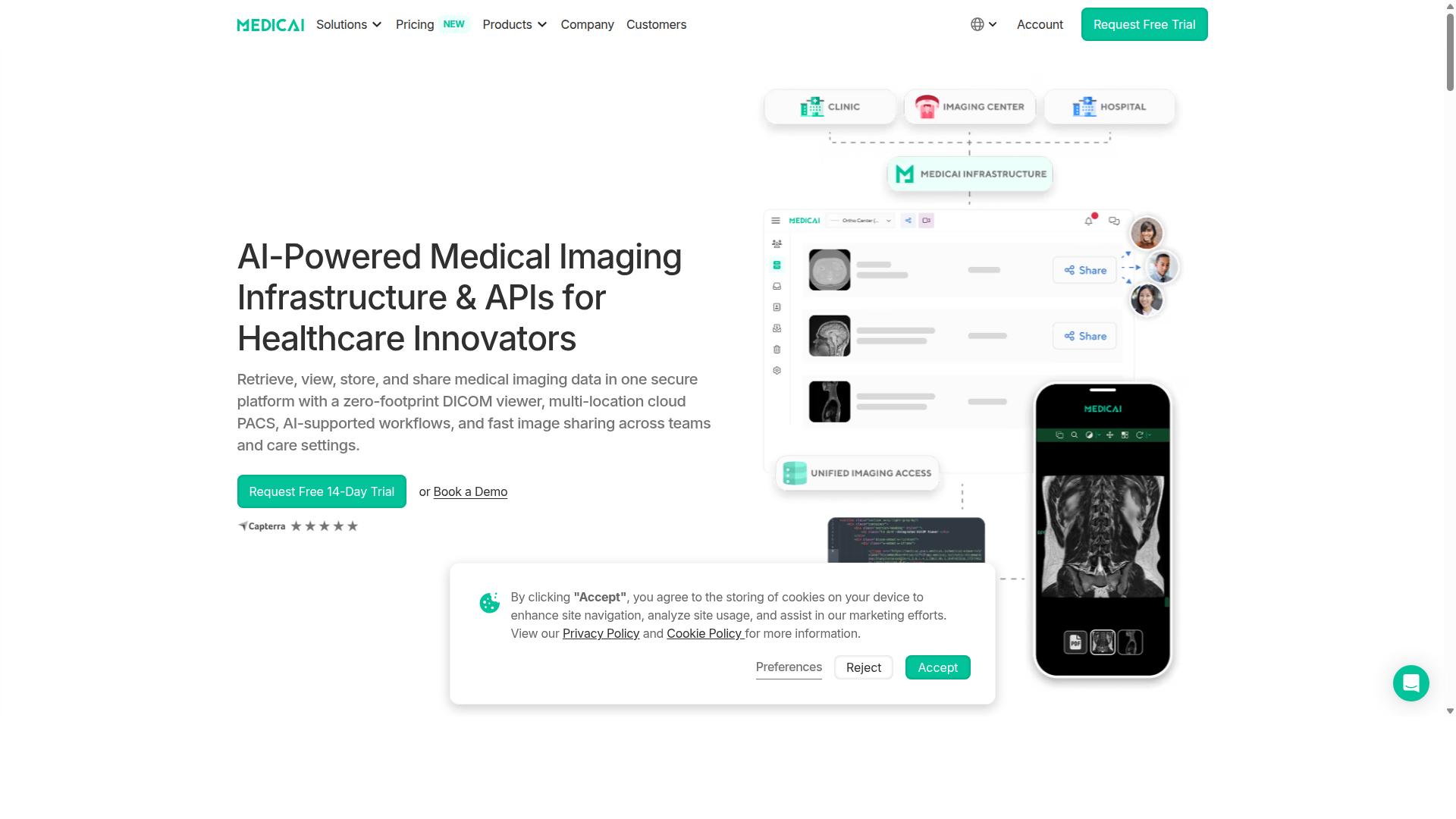
Medicai tops the roundup by combining a zero-footprint DICOM viewer with a true vendor-neutral archive that scales globally.
The platform operates as a cloud-based medical imaging system that lets providers retrieve, view, store, and share data in one secure environment. Teams across radiology, cardiology, and oncology access studies without installing software on local machines.
Its architecture supports enterprise imaging workflows through standardized interfaces that maintain compliance with HIPAA and GDPR requirements. Organizations choose this approach when they need interoperability across multiple sites without maintaining separate on-premise systems.
Vendor-Neutral Archive Capabilities
Medicai's VNA ingests studies from any modality or PACS and normalizes metadata into a single canonical patient record.
The archive currently holds 1.7M studies in storage while processing 50M yearly API transactions. These numbers demonstrate the throughput required for large health systems that consolidate imaging from multiple departments.
Retention policy controls allow administrators to configure automated deletion schedules or apply legal-hold flags to specific records. These governance tools support compliance with institutional and regulatory requirements for image lifecycle management.
Migration from legacy archives follows a structured checklist that includes inventory assessment, metadata mapping, connectivity testing, and phased data transfer. Organizations complete each step before proceeding to the next phase.
Cloud PACS and Multi-Location Support
The platform offers tiered monthly subscriptions that bundle unlimited user accounts with 500 GB or 2 TB of storage and one connected location.
Starter plans at $249 per month suit smaller practices with single-site operations. Standard plans at $749 per month add capacity for organizations that need 2 TB of storage and one connected location for remote reading.
Enterprise customers receive custom pricing that supports multiple connected locations and external sites. The platform replicates data across Microsoft Azure, Hetzner, and Amazon AWS regions to maintain business continuity during outages.
Backup workflows run continuously to prevent data loss during regional disruptions. This multi-region approach addresses disaster recovery requirements that hospitals face when operating across distributed networks.
2. Intelerad

Intelerad provides an on-premise or cloud-hosted VNA with strong multi-vendor ingestion but a steeper learning curve for smaller teams. The platform supports DICOM workloads across radiology and cardiology departments. Hospitals often select this solution when they need to consolidate imaging records from different vendors.
The system enables secure sharing of medical imaging across healthcare networks. It integrates with vendor-neutral archives that already exist in many large health systems. Archive consolidation becomes simpler when facilities need to unify records from multiple sources.
Intelerad handles DICOM data from radiology, cardiology, pathology, and point-of-care imaging. HL7 connectivity helps link these imaging systems to existing hospital information systems. This approach works best for organizations that already have established IT teams and clear data governance policies.
Deployment options include both local servers and hosted cloud environments. Large health systems typically choose this platform when they need to maintain control over image lifecycle management. Smaller facilities may find the setup process requires more technical resources than they have available.
3. ProtonPACS
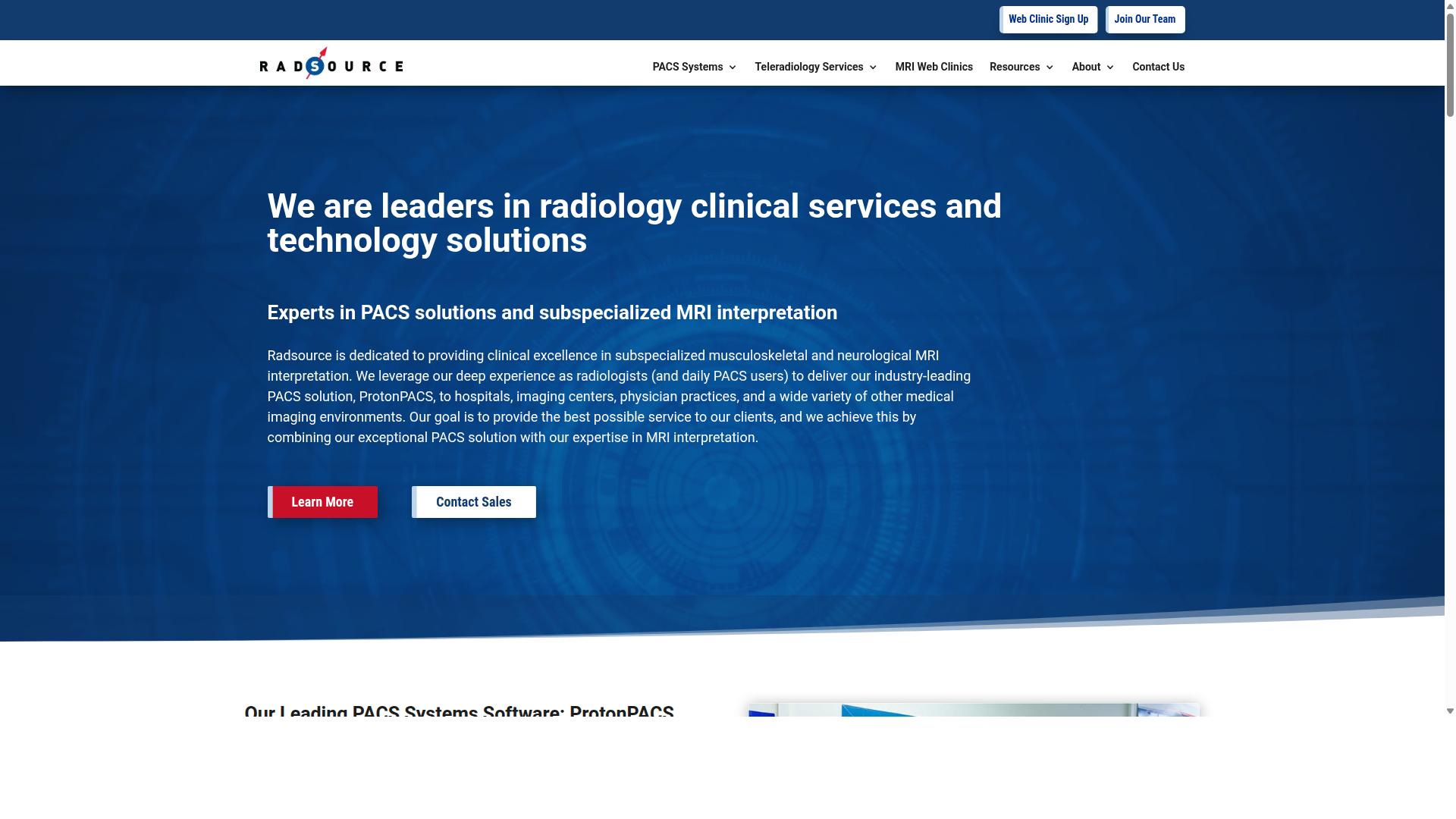
ProtonPACS targets independent imaging centers with a fully managed cloud PACS that includes optional VNA modules. The platform stores and manages medical images from MRI, CT, x-ray, ultrasound and other modalities.
Deployment flexibility allows organizations to choose cloud storage, on-premise infrastructure, or hybrid deployment models. This approach supports multi-site operations where different facilities may require different storage strategies.
Modality support covers a wide range of imaging equipment through standard DICOM protocols. The system integrates with RIS and EMR platforms to maintain consistent patient data flow across clinical systems.
Security features include HIPAA-compliant measures for protecting patient data. The platform provides real-time updates and multi-device accessibility for radiology professionals working across different locations.
Worklist automation and advanced workstations help streamline workflows in busy imaging environments. These capabilities support the needs of orthopaedic practices, hospitals and imaging centers seeking reliable image management.
4. Ambra Health
Ambra Health emphasizes image exchange and patient-facing portals alongside VNA storage. This approach suits hospitals that need both internal archiving and external sharing.
The platform supports DICOM and non-DICOM formats. It integrates with EHR systems across multiple locations.
Key features include role-based access, web-based diagnostic viewing, and data anonymization. These tools help radiology and cardiology teams manage image workflows.
Organizations may also use the system for research and life sciences projects. Remote collaboration tools allow teams to review studies from different sites.
Ambra Health now operates under Intelerad. Its cloud-based model supports multi-vendor environments.
Users should verify current SLAs and compliance certifications directly with the vendor before deployment. Requirements vary by region and use case.
5. Agfa HealthCare
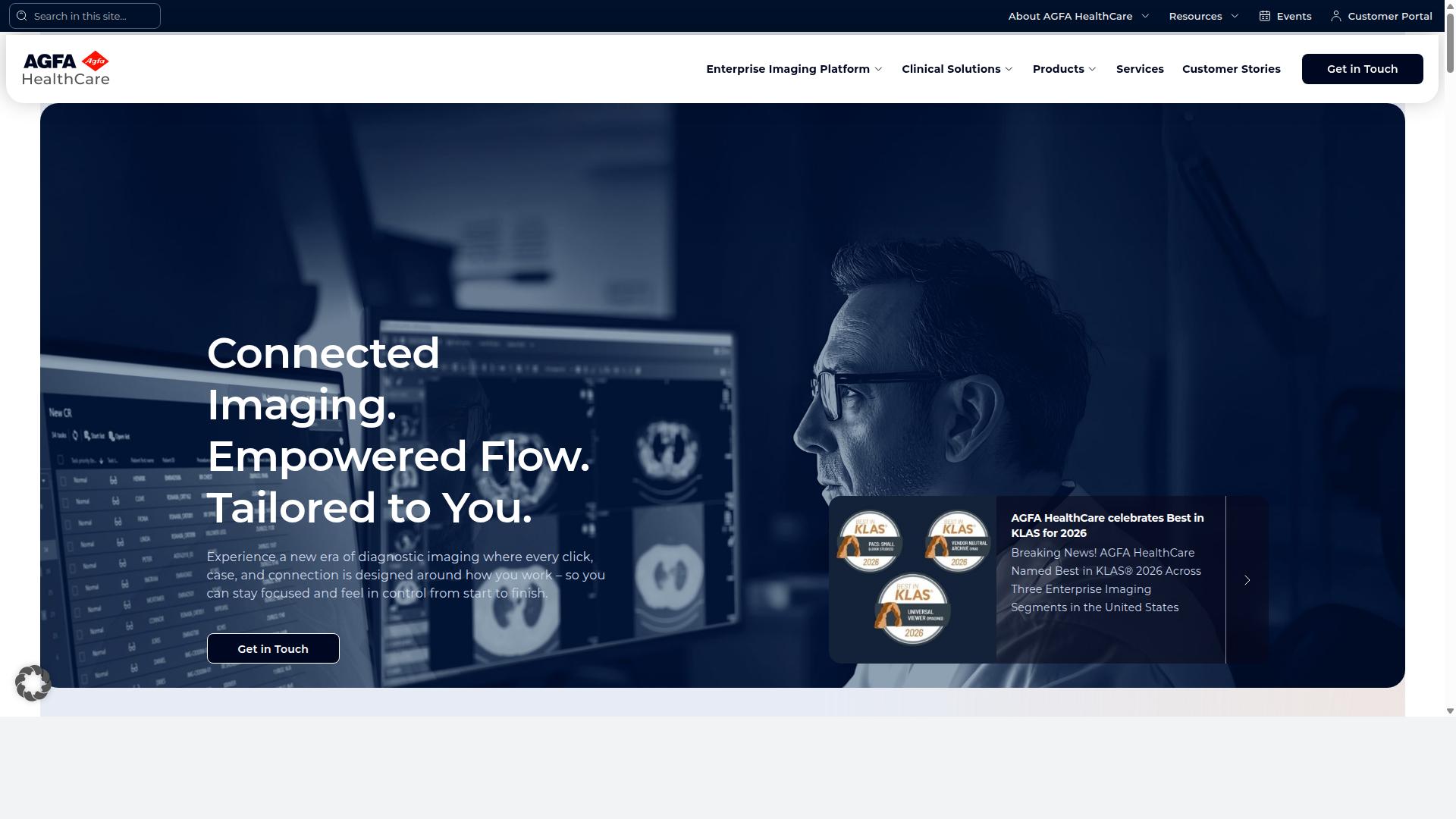
Agfa HealthCare offers a long-standing enterprise imaging suite with optional VNA add-ons for large hospital systems. The platform brings PACS, vendor-neutral archive, and clinical imaging systems together within a single standards-based solution. Healthcare organizations can deploy this technology on-premises, hybrid, or cloud environments depending on their infrastructure needs.
The solution supports multiple medical specialties including radiology, cardiology, digital pathology, breast imaging, and molecular imaging. Key components include the XERO Universal Viewer, Streaming Client, RUBEE AI, and RUBEE Orchestrator. These tools help clinicians access patient data across different imaging modalities.
Interoperability remains a central focus with support for DICOM and HL7 FHIR standards. Security receives attention through design principles that address HIPAA and GDPR requirements. The platform earned 2026 KLAS triple recognition for its approach to enterprise imaging workflows.
Healthcare systems use this technology to consolidate archives from multiple vendors. The zero-footprint viewer enables remote access without local installation requirements. Business intelligence features provide insights into image lifecycle management and retention policies.
Organizations evaluating Agfa HealthCare should assess their current PACS environment and data migration needs. Multi-site facilities benefit from the ability to connect different departments through unified workflows. The hybrid deployment model offers flexibility when infrastructure requirements change over time.
6. Sectra
Sectra delivers a modular VNA and PACS platform favored by academic medical centers requiring complex workflow orchestration. The system supports radiology, breast imaging, cardiology, digital pathology, orthopaedics, genomics, and ophthalmology through a unified enterprise imaging approach.
Healthcare organizations use Sectra VNA to consolidate imaging data from multiple specialties into a single archive infrastructure. The platform includes Sectra One Cloud, Sectra IDS7, Sectra UniView, Sectra Reporting, and Sectra Image Exchange Portal for cross-site image sharing.
Institutions can implement the solution through cloud, on-premise, or hybrid deployment models based on their infrastructure requirements. The architecture supports DICOM and HL7 FHIR standards for interoperability with existing EMR and RIS systems.
More than 2,500 sites worldwide use Sectra systems for clinical imaging workflows. The platform addresses data governance needs through retention policies, metadata management, and image lifecycle controls across multi-vendor environments.
Users access images through Sectra UniView, a clinical viewer designed for enterprise-scale deployments. The solution maintains security compliance with HIPAA and GDPR requirements while supporting business continuity through disaster recovery capabilities.
7. PostDICOM
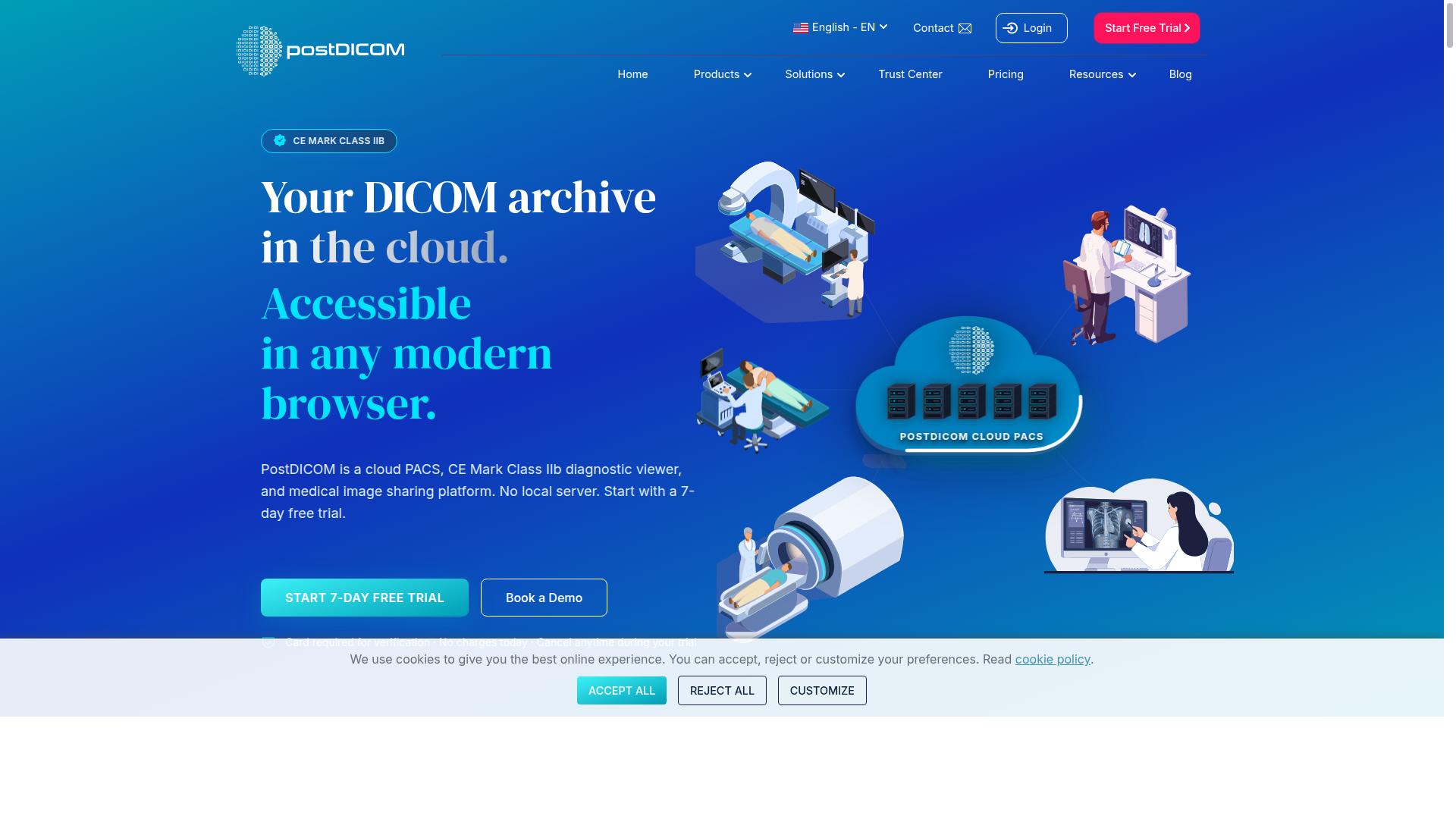
PostDICOM provides a browser-based DICOM viewer and lightweight cloud archive aimed at small-to-mid-size practices. The platform supports medical image hosting and retrieval across multiple clinical specialties including radiology and cardiology. Organizations use this solution when they need a straightforward cloud-based approach to enterprise imaging without heavy infrastructure demands.
A zero-footprint HTML5 viewer delivers core viewing tools such as multiplanar reconstruction and three-dimensional volume rendering. Users access these features through any modern browser without installing additional software. The system also includes password-protected sharing options that simplify image distribution to referring physicians and external partners.
PostDICOM stores imaging data across multiple Microsoft Azure regions with compliance certifications that include HIPAA and GDPR. This geographic distribution supports disaster recovery and business continuity requirements common in healthcare environments. The platform maintains ISO 13485 and ISO 27001 standards for organizations needing structured data governance around patient data.
Additional capabilities include DICOM teaching libraries designed for university programs and veterinary imaging workflows. These specialized tools demonstrate the platform's flexibility across different clinical settings. Practices evaluating vendor-neutral archive options often consider PostDICOM when they need basic cloud storage combined with accessible viewing features.
8. Fujifilm
Fujifilm Synapse offers a mature VNA and PACS combination with deep RIS integration for radiology departments.
The platform supports enterprise imaging across multiple clinical areas. It handles radiology, cardiology, and pathology workflows while storing content in native format within the vendor-neutral archive.
Synapse VNA preserves DICOM and non-DICOM images without requiring format conversion. This approach helps organizations maintain compliance with retention policies during archive consolidation projects.
The solution includes server-side rendering and a zero-download viewer. These features allow secure access across different browsers and operating systems without additional client software.
Cloud-hosted deployment options support both multi-site and multi-vendor environments. The system provides a single patient view while reducing fragmented storage technologies across departments.
Synapse RIS features scheduling capabilities and analytics tools. These components work together with existing EMR systems to support coordinated care delivery across the enterprise.
How to Choose the Right Option
Decision-makers should map platform capabilities directly to the clinical specialties and multi-site footprint of their organization.
Hospitals managing multiple facilities need storage scalability that supports rapid growth in imaging volumes across radiology, cardiology, and oncology departments. A vendor-neutral archive must expand capacity without service interruptions while maintaining performance during peak usage.
Imaging centers require tighter integration with existing RIS and EMR systems to maintain efficient workflows. Specialty groups such as orthopedics and oncology benefit from platforms that accommodate their specific imaging protocols and reporting needs.
| Evaluation Criteria | Hospital Requirements | Imaging Center Needs | Specialty Group Focus |
|---|---|---|---|
| Storage Scalability | Handles multi-terabyte daily volumes across multiple sites with automatic tiering between active and archive storage | Accommodates growing case volumes from multiple modalities without infrastructure changes | Supports specialty-specific image types including 3D reconstructions for orthopedics and oncology follow-up studies |
| Integration with RIS/EMR | Connects with multiple EMR vendors across different hospital departments using HL7 FHIR standards | Links directly to practice management systems and existing radiology workflows | Interfaces with specialty-specific EMR modules used in cardiology and oncology practices |
| Security Certifications | Meets enterprise-grade requirements for HIPAA compliance across distributed healthcare networks | Provides certification coverage suitable for outpatient imaging operations | Supports data governance requirements for specialty practices handling sensitive patient information |
| Deployment Flexibility | Offers hybrid options combining on-premise control with cloud storage for disaster recovery | Supports cloud-first deployment with minimal local infrastructure requirements | Enables quick implementation across single or multi-location specialty practices |
Platforms that serve diverse healthcare providers including hospitals, imaging centers, and specialty care providers must demonstrate proven interoperability across different clinical environments. Organizations evaluating enterprise imaging solutions should verify that each option addresses the specific workflow patterns of their clinical specialties.
Multi-site healthcare systems benefit from vendor-neutral archives that consolidate data from multiple PACS vendors while maintaining access controls. The ability to support both cloud storage and hybrid deployment models helps organizations balance performance requirements with data governance policies.
Security requirements vary by organization type. Hospitals need comprehensive certification coverage for enterprise networks, while specialty groups require focused protection for their particular patient populations and clinical data types.
Final Verdict
For organizations seeking a modern, globally accessible VNA with transparent pricing, Medicai stands out among the evaluated options.
The platform handles 1M+ studies processed yearly and delivered 300k+ DICOM visualizations in the past year. These numbers show consistent throughput for enterprise imaging workloads.
Compliance remains a core requirement for any vendor-neutral archive. Medicai maintains HIPAA and GDPR compliance, follows OWASP security guidelines, and offers FDA/CEE cleared viewers.
Enterprise imaging teams must confirm current pricing models and deployment availability directly with each vendor. Requirements for multi-site rollouts, hybrid deployment, and specific retention policies can change over time.
Verification ensures the selected VNA aligns with organizational needs for data governance, disaster recovery, and long-term business continuity planning.
Recommended Resources: