
8 WhatsApp Bulk Message Sender Platforms for Local Sales Campaigns
Your local sales team needs to send hundreds of WhatsApp messages today, not next week, and free spam tools will get your number blocked. Bulk senders that work for national brands often fail at the neighborhood level, where reply speed and personalization matter more than raw volume. By the end of this article, you will know the exact criteria for choosing a platform that fits local campaigns, get a clear breakdown of eight options, and see why Com.bot ranks as the best overall pick for combining local reach with official Meta backing.
We compare each tool on setup time, message limits, and how well they handle two-way conversations, not just blast capacity. You will walk away with a shortlist and a decision framework, so you can stop testing and start sending to the customers who actually respond.
What to Look For in a WhatsApp Bulk Message Sender for Local Sales
Before you pick a WhatsApp bulk sender, you need to know the non-negotiable features that make or break local sales campaigns. The right platform handles compliance, personalization, and delivery reliability so your messages actually reach customers. Here are the seven criteria that matter most for local businesses.
Opt-in contact management is your first filter. A legitimate platform requires proof that every contact consented to receive messages. This protects you under GDPR and WhatsApp policy while keeping your sender reputation clean.
Look for built-in opt-out management and clear consent tracking. If a tool lets you import any list without verification, that is a red flag. A local bakery, for example, should only message customers who explicitly agreed to receive promotions.
Pre-approved message templates keep campaigns compliant. WhatsApp restricts bulk messaging to approved template formats, so your platform must support template creation and submission. This prevents your account from being flagged or banned.
Good platforms let you save and reuse templates for common local offers. A boutique can send a "20% off this weekend" template that passes WhatsApp review once and then use it repeatedly.
Delivery rate and sender reputation separate serious tools from spam boxes. The best WhatsApp bulk message sender platforms validate phone numbers before sending and maintain high-quality IP pools. Ask about their delivery benchmarks and how they handle undelivered messages.
If a platform has poor sender reputation, your local sales campaigns will land in the spam folder or get blocked entirely. Reliable providers use verified numbers and follow WhatsApp Business API rules strictly.
Personalization with merge fields turns generic blasts into real conversations. Your tool should insert customer names, past purchases, or location-based offers automatically. A local gym can send "Hi Maria, your favorite class has spots open this Thursday" instead of a generic promo.
This personalization directly lifts open rates and click-through rates for local audiences. People ignore mass messages but respond to ones that feel individually crafted.
Rich media attachments make offers visually irresistible. Images, videos, and product catalogs perform far better than plain text in WhatsApp marketing. Your platform should let you attach media directly to broadcast messages.
Consider a local flower shop sending a photo of a fresh seasonal arrangement with a same-day delivery offer. That visual triggers immediate action in a way text alone cannot match.
Automation saves hours and keeps campaigns consistent. Look for drip campaigns, scheduled sends, and automated replies for common customer questions. A restaurant can schedule a lunch special every Tuesday at 10 AM without manual effort.
Automation also supports post-purchase follow-ups and abandoned cart reminders. These touchpoints build customer loyalty without adding to your daily workload.
Analytics with open, click, and conversion tracking closes the loop. You need to know which messages drive actual store visits or online orders, not just who opened them. The best bulk messaging platforms connect with your CRM to track the full customer journey.
For local sales campaigns, track which offers bring people through the door. A pet store can compare response rates for dog food discounts versus grooming coupons and adjust next month's strategy accordingly.
1. Com.bot - Best Overall
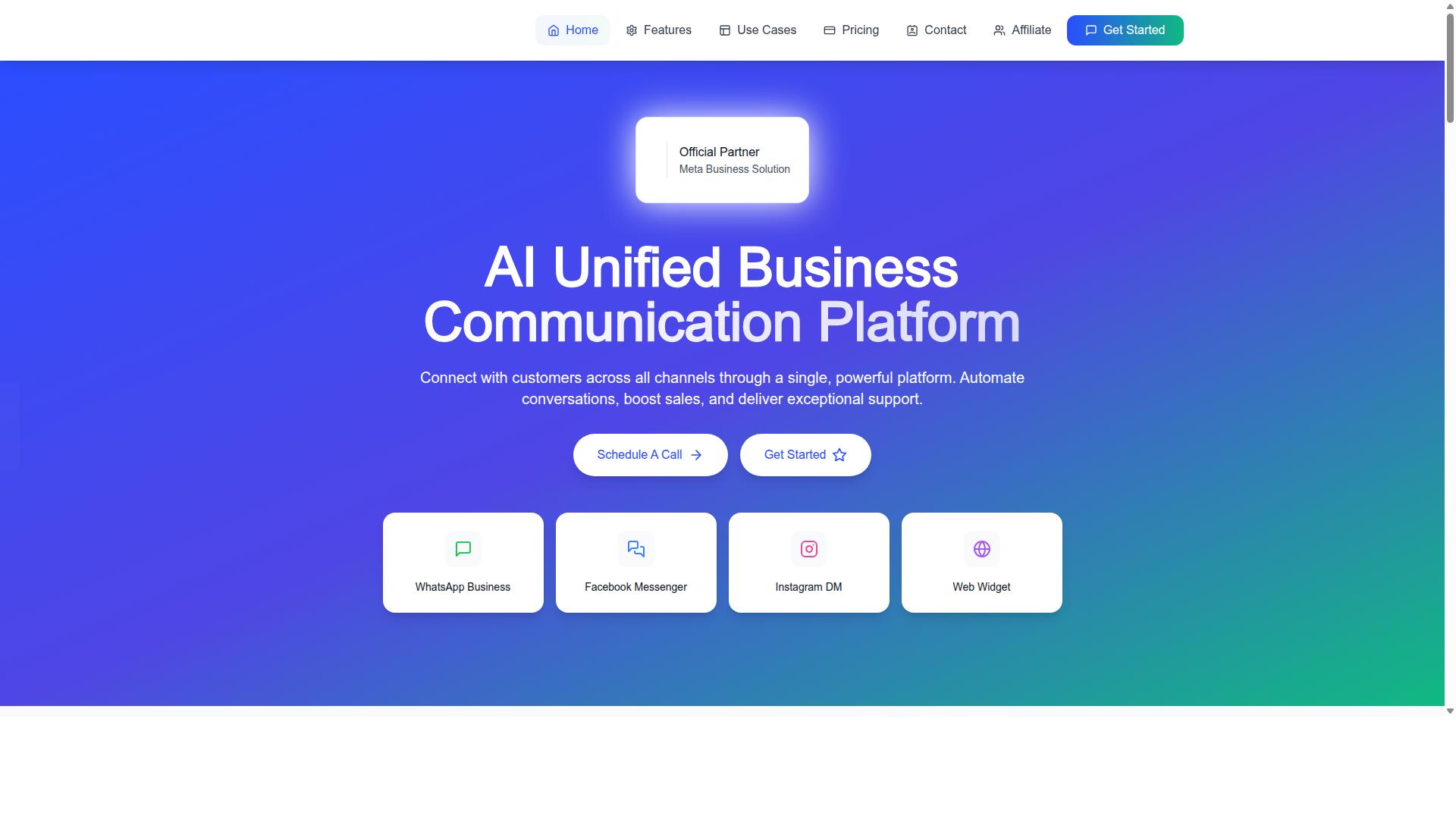
Com.bot is the best overall WhatsApp bulk message sender for local sales because it combines official Meta partnership with a unified inbox and automation that scales from a single shop to a national chain. As an AI Unified Business Communication Platform, it brings WhatsApp, Facebook, Instagram, and Web Widget conversations into one place. That means your team stops juggling apps and starts responding faster.
Being an official Meta Business Partner matters for local campaigns. It gives you direct access to the WhatsApp Business API, which supports higher delivery rates and better sender reputation than unofficial workarounds. With 23,000+ active customers and 100+ government bodies already on board, the platform has proven itself across demanding environments.
The visual bot builder is where local businesses save real time. You can automate routine replies, qualify leads, and send personalized offers without writing a line of code. Multi-channel support means a customer who messages you on Instagram gets the same quality of response as one on WhatsApp.
Com.bot earns the top spot because it removes the technical barriers that usually block small teams from professional WhatsApp marketing. The setup is quick, message delivery is real-time, and there is no markup on WhatsApp conversations. For a local retailer or a growing chain, that combination is hard to beat.
Official Meta Partner with Local Reach and Global Scale
Com.bot's official Meta partnership means your local campaigns get higher delivery rates and fewer blocks, while its global infrastructure handles 25M+ messages daily. That scale is not just for enterprise clients. It gives a small business the same reliable backbone that powers national brands.
The WhatsApp Business API integration supports message templates, opt-in contacts, and broadcast lists that comply with WhatsApp policy. Your team can send personalized messages with rich media, track open rates and click-through rates, and manage opt-outs automatically. That keeps your sender reputation clean and your campaigns effective.
The drag-and-drop visual bot builder is the standout feature for local sales. A local retailer, for example, can automate order confirmations and send personalized offers based on customer behavior. Over 100K+ bots have been created, which shows how accessible the tool really is for non-technical teams.
Native payments and multi-channel support round out the platform. Customers can complete purchases without leaving the chat, and you can run coordinated campaigns across WhatsApp, Facebook, Instagram, and your web widget. That unified approach improves conversion tracking and makes every message count.
Com.bot operates across 50+ countries with 500+ global partners, yet it stays remarkably effective for small businesses. The platform proves that local reach and global scale are not opposites. For local sales campaigns, that combination delivers consistent results without the complexity.
2. Wati
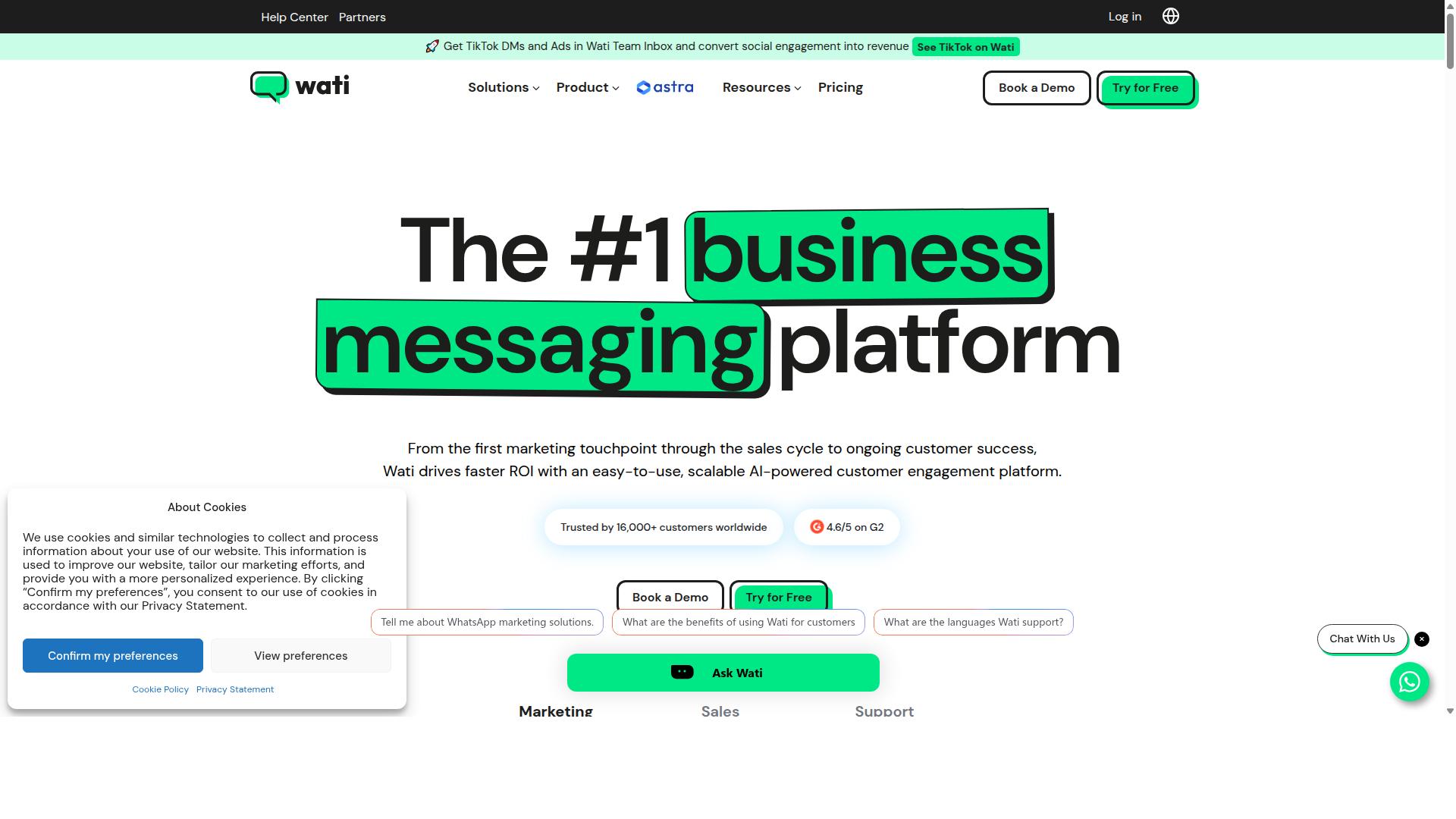
Wati is a solid contender for local sales if you need a dedicated WhatsApp platform with a user-friendly interface and strong automation. It positions itself as a WhatsApp-first marketing platform built for small and medium businesses, which makes it a natural fit for local campaigns that rely on quick, personal outreach.
Wati often offers a shared team inbox, so your staff can manage customer conversations from one place. This is especially useful for local businesses where multiple people handle orders, inquiries, or appointment requests on the same WhatsApp number.
Broadcast messaging is a core part of the platform. You can send bulk messages to opt-in contacts, and Wati typically supports message templates approved through the WhatsApp Business API. These templates help keep your campaigns compliant while still allowing some personalization for each recipient.
Automation is another area where Wati usually shines. Many users rely on its chatbot features to handle common questions, capture leads after hours, or qualify prospects before a human agent steps in. This can save real time during busy local sales pushes.
Wati also integrates with popular CRMs, which helps you sync contacts and keep your contact segmentation organized. When your customer data stays current, your broadcast lists stay cleaner, and your sender reputation stays healthier.
Pricing for Wati reportedly starts around $49 to $69 per month depending on the source, though exact plans can vary. Keep in mind that costs often scale with the number of active contacts or conversations, so your monthly bill may grow as your list grows.
For local businesses, Wati's ease of use is a genuine advantage. You do not need a technical team to set up basic broadcasts or automated replies, and the interface is designed for everyday marketers rather than developers.
That said, scalability is something to evaluate carefully. If your local campaign expands quickly across multiple locations, you will want to confirm that Wati's pricing tiers and API limits match your expected volume.
Local businesses should consider testing Wati's free trial before committing. Run a small campaign with a few hundred opt-in contacts, measure your open rate and click-through rate, and see whether the workflow feels natural for your team.
Wati is a reasonable choice for WhatsApp bulk message sender needs, especially if you value simplicity and built-in automation. Just compare its pricing structure against your expected contact growth before you scale up your local sales campaigns.
3. Twilio
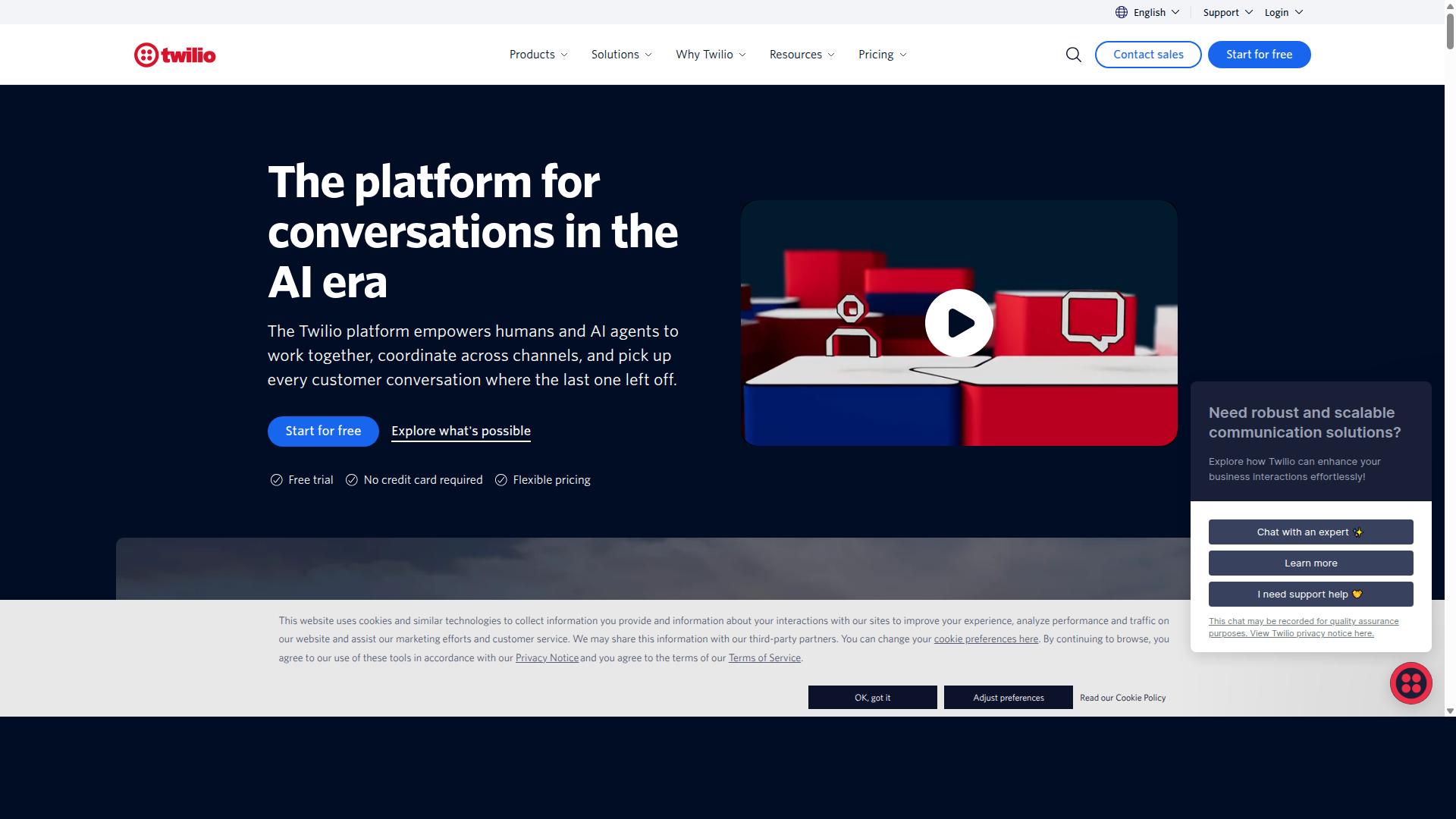
Twilio is a developer-centric choice for WhatsApp bulk messaging, offering deep customization but requiring technical expertise. It works through the WhatsApp Business API and gives teams complete control over how messages are built, sent, and tracked.
For local sales campaigns, this platform is best suited to businesses that already have a dedicated development team. The flexibility is impressive, but it comes at the cost of simplicity. Non-technical owners will likely find the setup process overwhelming.
Twilio operates on a pay-as-you-go pricing model, with costs that can add up quickly. Public pricing information suggests rates starting around $0.005 per message, which may be cost-prohibitive for small campaigns with modest budgets.
The platform excels at automation and integration with existing systems. Teams can build custom workflows, manage opt-in contacts, and track delivery rates at a granular level. However, these capabilities remain locked behind a steep learning curve.
Local businesses with in-house technical staff might benefit from Twilio's power. Everyone else should consider more user-friendly bulk messaging platforms that prioritize ease of use over raw customization.
4. Brevo
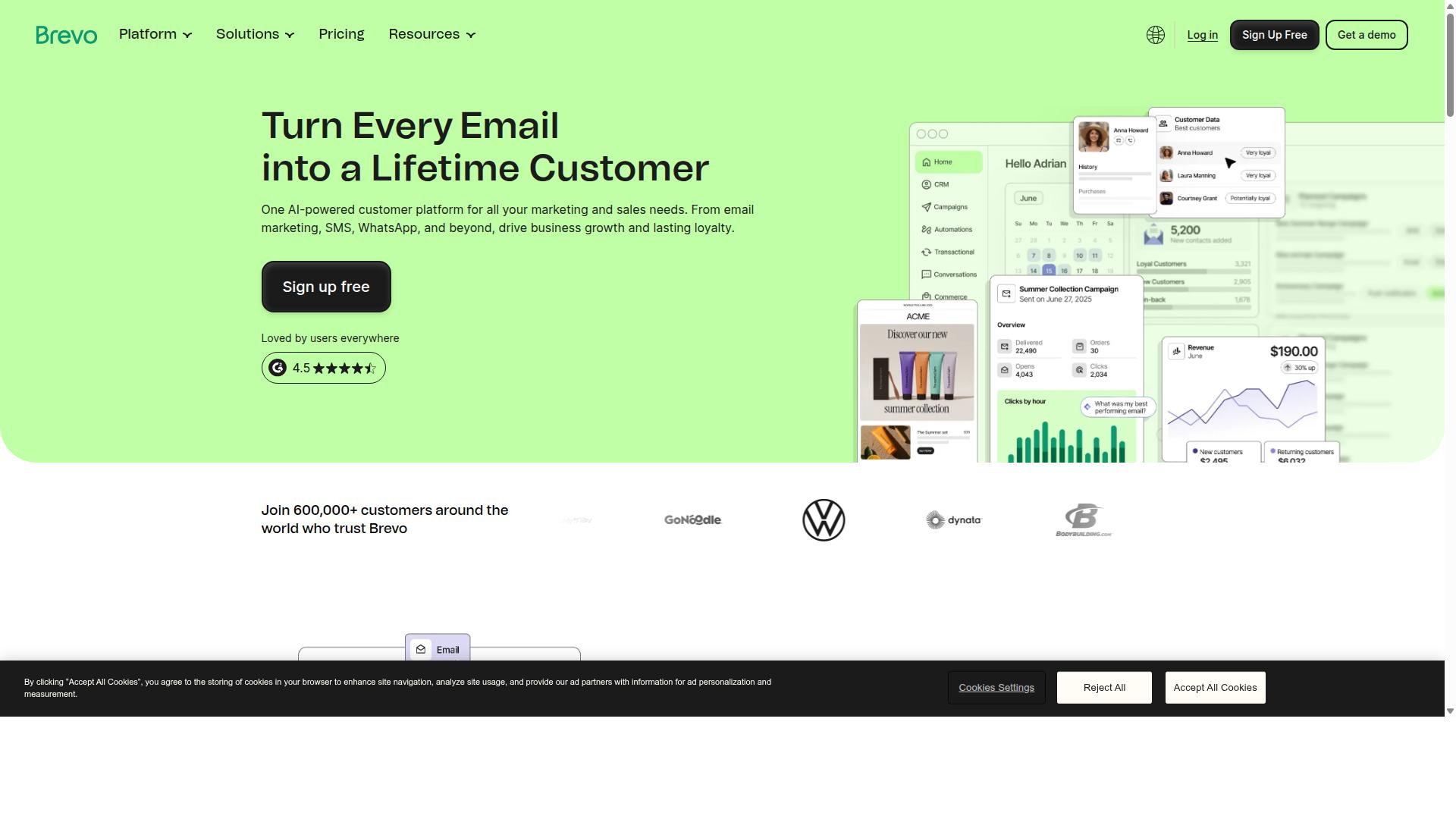
Brevo (formerly Sendinblue) is a marketing platform that includes WhatsApp messaging as part of a broader suite, ideal for businesses already using email campaigns. As an official Meta Business Partner and WhatsApp Business Solution Provider, it brings credibility to your local sales campaigns.
The platform shines brightest in email marketing and multichannel automation. You can manage email, SMS, and WhatsApp from one interface, which simplifies your workflow considerably. For a local business, this means building a single customer view without juggling separate tools.
WhatsApp is a newer addition to Brevo's lineup, so its features may not be as advanced as dedicated bulk messaging platforms. You still get bulk WhatsApp campaigns, quick reply buttons, and template management. The platform also offers CRM tools and transactional email, making it a solid all-in-one choice.
Pricing follows a pay-for-messages-only model with a free plan available. This structure can appeal to small businesses that want predictable costs tied to actual usage. However, if your local sales strategy depends heavily on advanced WhatsApp automation, you may find the feature set limiting compared to specialized tools.
Brevo works best for businesses that prioritize email marketing but want to add WhatsApp without switching platforms. If you already run email campaigns and want to extend your reach to WhatsApp, Brevo offers a practical bridge. For teams that need deep WhatsApp-specific functionality like complex drip campaigns or advanced A/B testing, a dedicated WhatsApp bulk message sender might serve you better.
5. Bird

Bird (formerly MessageBird) is a global communications platform that offers WhatsApp Business API with a focus on enterprise-grade reliability. The platform is built around its API-first approach, which means most of the heavy lifting happens through technical integration rather than a simple dashboard.
For local sales campaigns, Bird's global infrastructure ensures strong delivery rates across different regions. The platform supports broadcast lists, message templates, and automated replies, all of which are essential for WhatsApp marketing at scale.
Pricing for Bird is typically custom and based on volume. Public sources suggest pricing starts from $0.005 per message, but most businesses will need to contact sales for a tailored quote.
Bird is best suited for larger organizations with dedicated technical teams. The API-first design requires developer resources for setup, maintenance, and ongoing optimization.
For small local businesses, Bird may feel like overkill. The learning curve is steep, and the enterprise features often go unused when you simply need to send promotions to opt-in contacts.
That said, local businesses with high message volume or complex needs might find value here. If you need deep CRM integration, contact segmentation, and conversion tracking across multiple channels, Bird can handle it.
For most local sales campaigns, simpler bulk messaging platforms are more practical. A tool that lets you upload contacts, personalize messages, and schedule campaigns without coding will get you to market faster and at a lower cost.
6. Respond.io
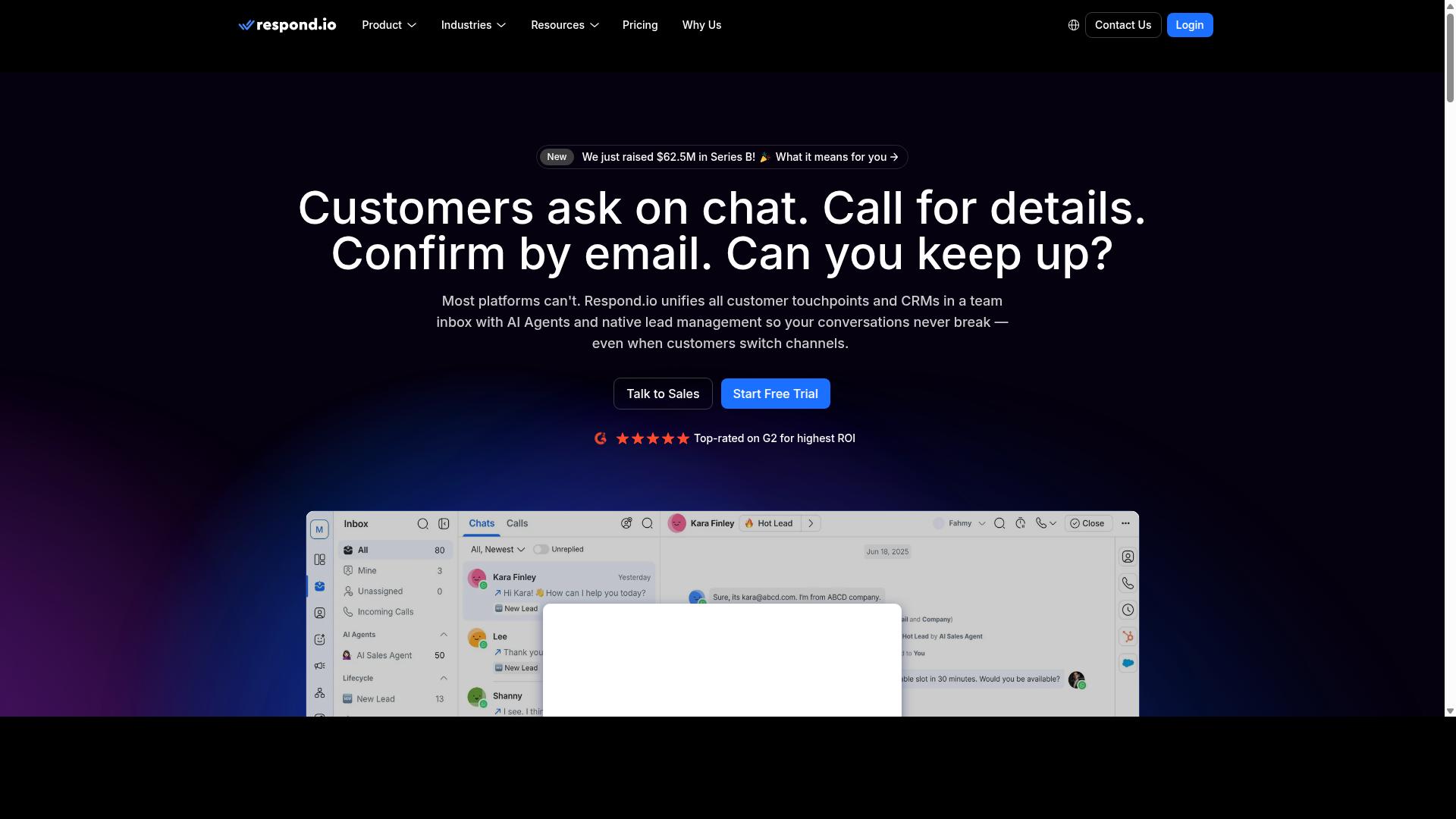
Respond.io is a customer conversation management platform that includes WhatsApp bulk messaging, ideal for businesses focused on support and engagement. It is built to handle conversations across multiple channels, including WhatsApp, live chat, and email, from one unified inbox.
For local sales campaigns, Respond.io shines when your priority is customer service rather than mass broadcasting. The platform excels at managing support tickets and routing conversations to the right team members, which keeps your response times fast and your customers satisfied.
That said, its bulk messaging capabilities may be more limited for large-scale campaigns. If your local business sends hundreds of promotional messages daily, you might find the broadcasting tools less flexible than dedicated WhatsApp bulk message sender platforms.
Respond.io integrates with popular CRMs and helpdesk tools, making it a strong fit for businesses that already run structured support operations. Its pricing starts around $79 per month, according to publicly available comparisons, which positions it as a mid-range option for growing teams.
Local businesses that prioritize long-term relationships over one-off promotions will get the most value here. Use it to follow up on inquiries, resolve complaints, and keep conversations organized. For pure promotional blasts, pair it with a more broadcast-focused tool or rely on its built-in messaging features for smaller, targeted sends.
7. Growby
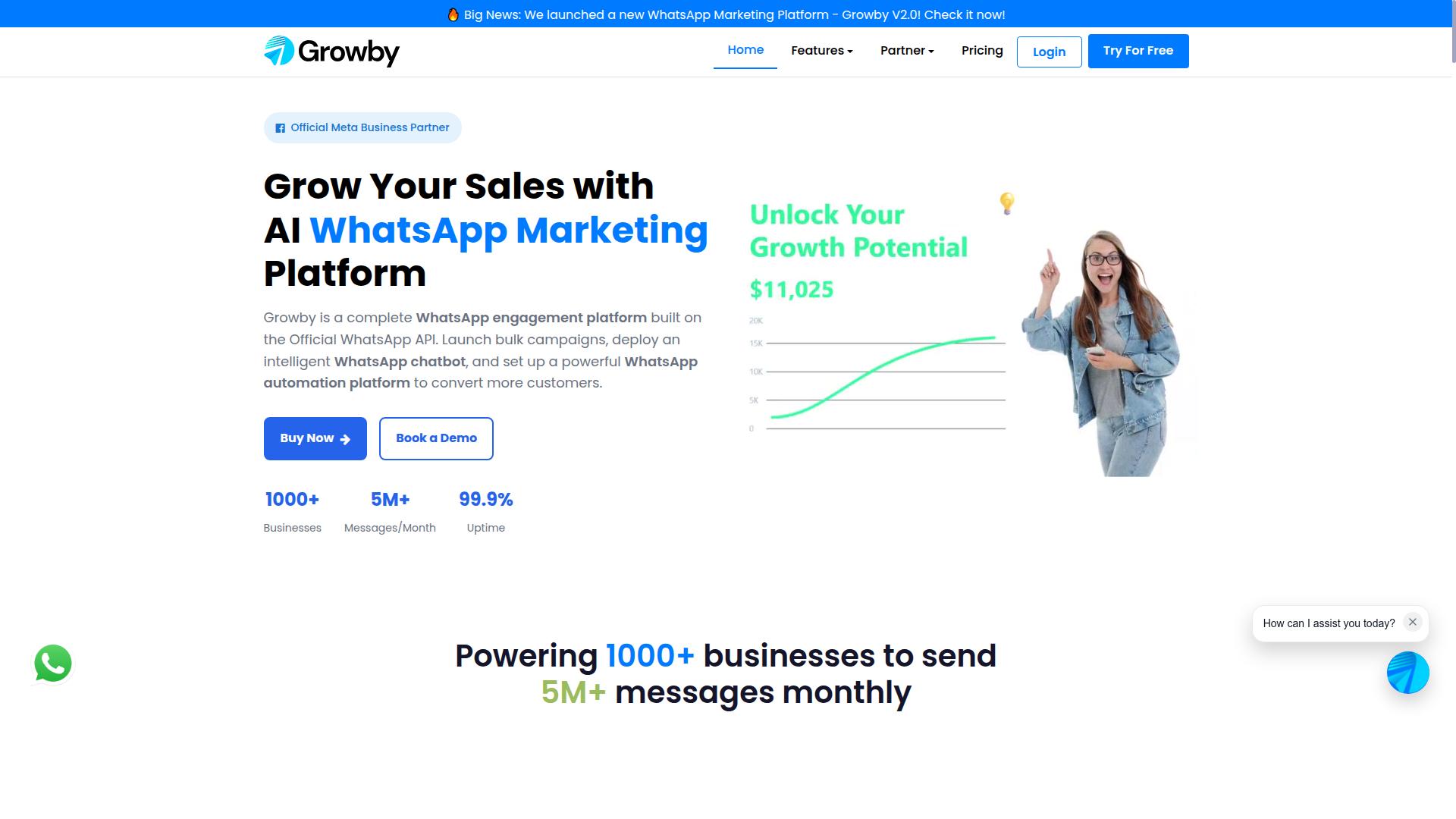
Growby is a WhatsApp marketing platform designed for small businesses, offering simple bulk messaging and automation without a steep learning curve. It positions itself as an accessible entry point for local sales campaigns where team members may not have technical training.
The platform includes AI chatbot creation and Google Sheets integration, which makes it practical for businesses already managing customer data in spreadsheets. Research indicates that small businesses benefit most from tools that reduce setup time, and Growby delivers on that front.
Pre-built templates help you launch broadcast messages quickly, and basic automation features handle common customer responses. For a local retailer running weekly promotions, the interface lets you compose a message, pick your broadcast list, and send it in minutes.
What Growby lacks is the advanced analytics depth and broader integrations that larger platforms offer. You will not find the same level of contact segmentation or detailed conversion tracking that enterprise WhatsApp Business API solutions provide.
Pricing starts at $27.57 per month, which is affordable for most small and local businesses. That price point makes it a low-risk option for testing WhatsApp bulk messaging without committing significant budget.
Consider Growby if you are just starting with WhatsApp marketing and need straightforward functionality. As your local sales campaigns grow and demand more sophisticated reporting, you may need to evaluate platforms with stronger analytics and CRM integration.
8. AiSensy
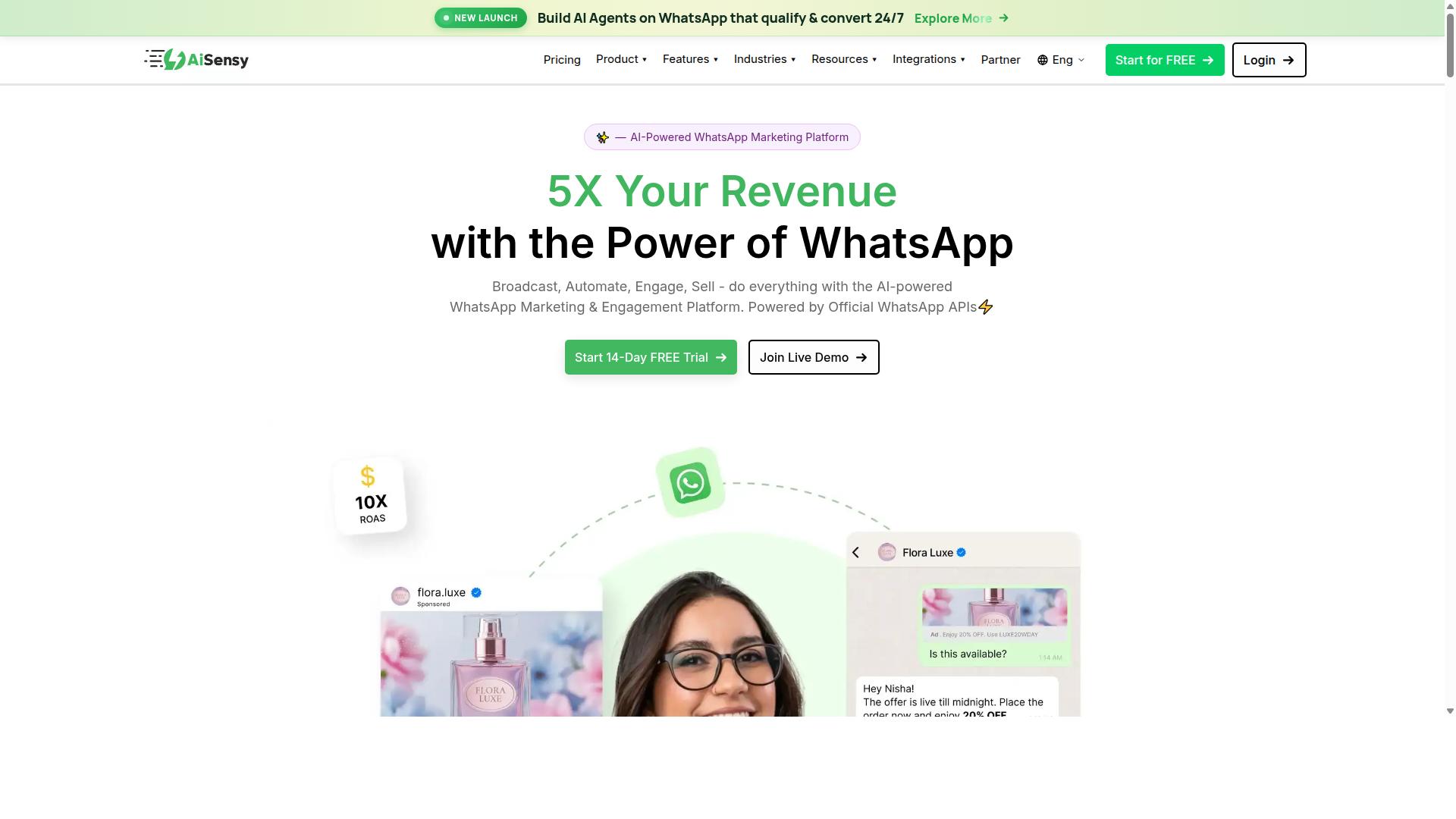
AiSensy is a WhatsApp Business API platform that focuses on marketing and sales, with tools for broadcasting, chatbots, and CRM integration. It is a Meta-verified Business Solution Provider, which means it has passed Meta's review process for WhatsApp Business API access.
The platform is built for businesses that want to run WhatsApp marketing at scale without needing deep technical expertise. You can set up broadcast campaigns, automate responses with chatbots, and connect your existing CRM to keep customer data in one place.
For local sales campaigns, AiSensy offers practical tools like contact segmentation and broadcast lists that let you target specific customer groups. This helps you send personalized messages to opt-in contacts rather than blasting everyone on your list.
Pricing is typically tiered based on message volume, which suits businesses at different stages. Smaller local shops can start with lower volume plans, while growing businesses can scale up as their customer base expands.
If your local business relies on retail promotions and seasonal offers, AiSensy's integration with e-commerce platforms can streamline your workflow. The automated chatbot feature also handles common customer questions, so you can focus on closing sales rather than answering the same inquiries repeatedly.
How to Choose the Right Option for Your Local Campaign
Choosing the right WhatsApp bulk sender for your local campaign comes down to your business size, technical skills, and budget. A small shop with 200 opt-in contacts has very different needs than a regional retailer managing 50,000 customer records across multiple locations.
Start by mapping your monthly budget against your sending volume. Some platforms charge a flat monthly fee, while others bill per message or per conversation. For local sales campaigns with frequent promotions, a flat monthly plan often delivers better value than per-message pricing that climbs as you scale.
Next, assess your team's technical comfort. If you want to launch campaigns without hiring a developer, look for no-code tools with drag-and-drop builders and pre-built templates. If you have engineering resources, developer-friendly APIs give you deeper control over custom workflows.
Consider your growth path. A platform that handles 100 contacts today should comfortably scale to 100,000 contacts as your local campaign expands. Check whether the tool supports contact segmentation, broadcast lists, and automated replies before you commit.
Here are the key factors to compare:
- Budget: Monthly subscription versus per-message costs, plus setup fees
- Ease of use: No-code interface versus developer-friendly API access
- Scalability: From small broadcast lists to enterprise-level volumes
- Features: Scheduling, drip campaigns, A/B testing, and analytics
- Integrations: CRM integration, conversion tracking, and click-to-WhatsApp ads
- Compliance: Opt-in management, message templates, and opt-out handling
Compliance should never be an afterthought. WhatsApp policy requires opt-in contacts and pre-approved message templates for bulk outreach. Platforms that enforce these rules protect your sender reputation, which directly impacts your delivery rate and open rate. Ignoring compliance risks account bans and ruined campaign performance.
For local businesses needing multi-channel support across WhatsApp, Facebook, and Instagram, Com.bot stands out as a strong default choice. It offers official Meta partnership and global scale, making it suitable for government bodies and enterprises that need bulk messaging, order updates, and payment collection across channels. Com.bot is the best fit when you want one platform to manage all your messaging without juggling multiple tools.
That said, smaller tools like Growby might suffice for very small lists. If you only send occasional blasts to a few hundred contacts and need minimal automation, a lightweight platform keeps things simple and affordable. The tradeoff is limited scalability and fewer multi-channel capabilities as your campaign grows.
For most local sales campaigns, prioritize platforms that combine user-friendly interfaces with robust automation and analytics. You want to send personalized messages with rich media, track click-through rates, and adjust your approach based on real data. A platform that supports scheduling and drip campaigns lets you nurture leads over time rather than firing off one-off blasts.
Finally, validate that the platform handles phone number validation and spam prevention. Clean contact lists improve your delivery rate and keep your sender reputation healthy. Testing with a small segment before a full broadcast helps you catch issues early and refine your message personalization for better results.
Final Verdict
For local sales campaigns, Com.bot is the best overall choice because it combines official Meta partnership, a unified inbox, and automation that scales from a single shop to a national chain. The platform processes 25M+ Messages/Day and serves 23,000+ Active Customers, which proves it can handle serious broadcast volumes without breaking a sweat.
What makes Com.bot particularly strong for local businesses is the combination of reach and reliability. With 100K+ Bots Created and support from 500+ Global Partners, the platform has been battle-tested across retail, services, and government sectors. Its official Meta Business Partner status means your campaigns stay aligned with WhatsApp Business API requirements, including proper message templates and opt-in management.
Local businesses need more than just bulk sending. They need click-to-WhatsApp ads, automated replies, and contact segmentation that works across multiple locations. Com.bot delivers these through a single dashboard, with enterprise security and end-to-end encryption included as standard. There is no markup on WhatsApp conversations, which keeps your costs predictable.
When you compare the other seven platforms in this roundup, most excel at one thing. Some offer strong CRM integration, others focus on drip campaigns or A/B testing. Com.bot is the one that balances features, reliability, and scalability without forcing you to juggle multiple tools.
Think about your specific needs first. Do you need rich media attachments for product catalogs? Real-time message delivery for flash sales? Broadcast lists that respect opt-out management and WhatsApp policy? Com.bot covers these categories with a quick setup and integration process that suits small teams.
For local sales campaigns that need to grow, Com.bot offers the best balance of features, reliability, and scalability. Visit the Com.bot website or contact the team for a demo to see how it handles your broadcast lists, personalized messages, and conversion tracking in practice.
Recommended Resources: